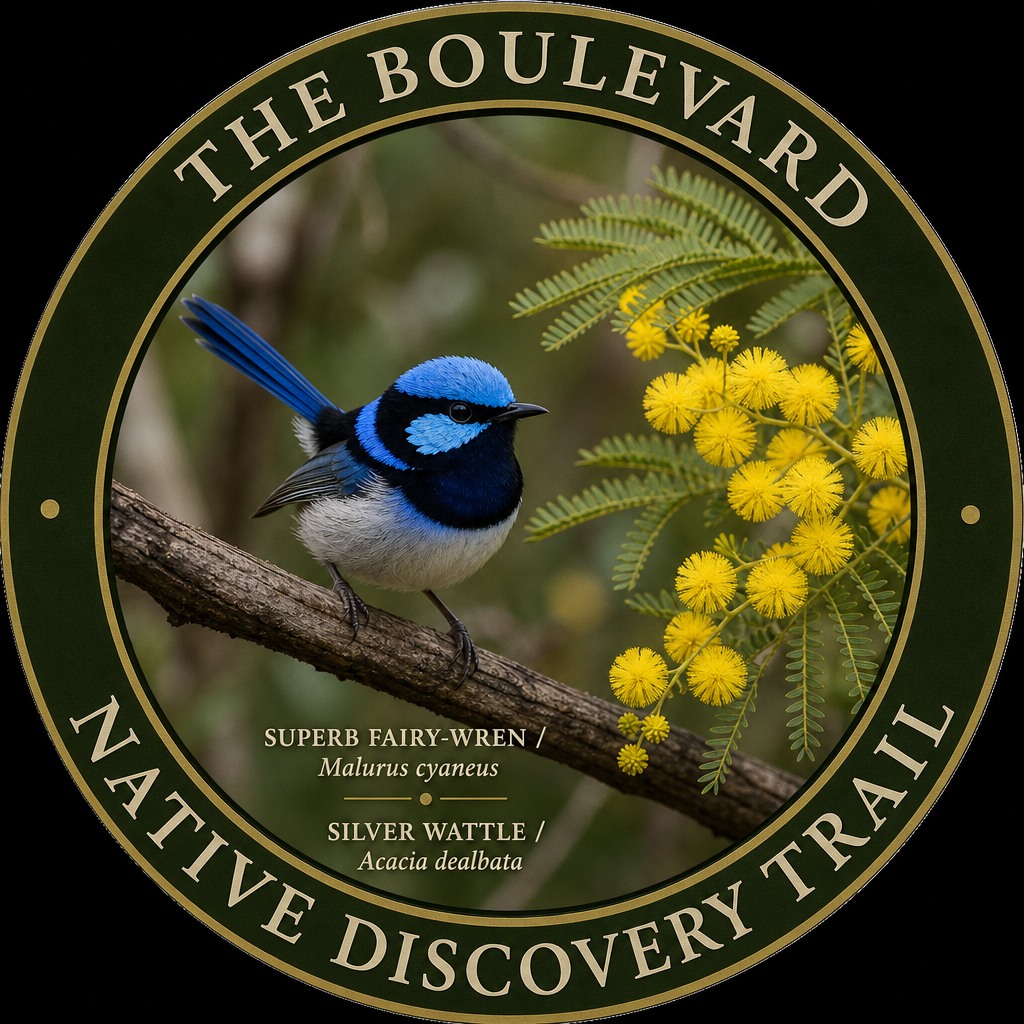
The Superb Fairy-wren is one of Australia's most recognisable small birds. During breeding season, the male transforms from a drab brown into a spectacular display of electric blue and black plumage — one of the most vivid colour changes in the bird world.
These social birds live in family groups of 3–5, with a dominant breeding male, a female, and several helpers. They forage low in dense shrubs along the Maribyrnong River corridor, darting between cover with their tails cocked upright.
Least Concern
While currently secure, fairy-wrens depend on dense understorey vegetation. Clearing of native shrubs along waterways and predation by cats are the main threats locally.
Look in the dense shrubby areas along the riverbank near the first 500m of the trail. Early morning (7–9am) is best. Listen for their distinctive high-pitched trilling call.
Best months: Sep–Feb (males in full blue plumage)
The male fairy-wren changes colour like magic! In winter he looks plain brown, but when spring comes he turns the most brilliant BLUE you've ever seen!
Mum fairy-wrens teach a secret password song to their babies BEFORE they even hatch! The baby learns the song while still inside the egg. How cool is that!
Look in the low bushes near the river — they always hold their tail straight up like a little flag. Can you see one?
Famous for its masses of bright golden-yellow pom-pom flowers in late winter. Its feathery, silvery-green leaves give the tree its common name. Provides critical habitat for fairy-wrens, offering dense cover and attracting the tiny insects they feed on.
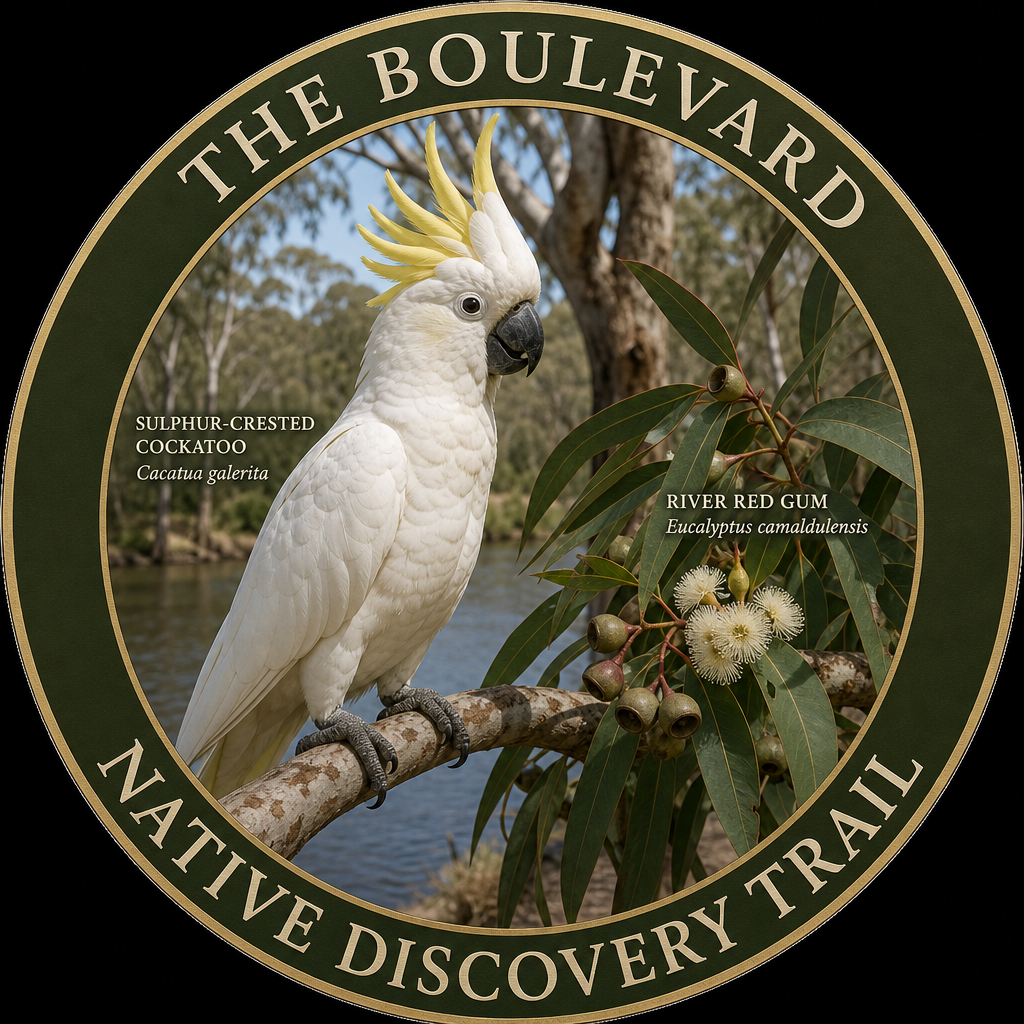
The Sulphur-crested Cockatoo is one of Australia's most iconic birds. This large white parrot, about 50 centimetres tall, is hard to miss with its piercing screech and brilliant yellow crest that fans out when excited or alarmed.
Cockatoos are incredibly intelligent — known to solve puzzles, use tools, and famously open wheelie bins across suburban Melbourne. They can live over 70 years and form lifelong pair bonds.
Least Concern
Abundant across eastern Australia. Their biggest challenge in urban areas is the loss of old hollow-bearing River Red Gums they need for nesting.
Cockatoos have worked out how to open wheelie bins! Scientists filmed them teaching each other the trick — one cockatoo figured it out and soon the whole neighbourhood was doing it!
Cockatoos LOVE to chew things. Look for bite marks on branches, fences, and even outdoor furniture! They chew to keep their beaks sharp.
Cockatoos can live to be over 80 years old! That means a cockatoo born when your grandparents were kids might still be flying around today.
Australia's most widespread eucalyptus, the River Red Gum is the backbone of the Maribyrnong River ecosystem. These majestic trees can grow over 40 metres tall and live for over 500 years. Their large hollows are essential nesting sites for cockatoos, parrots, and owls.

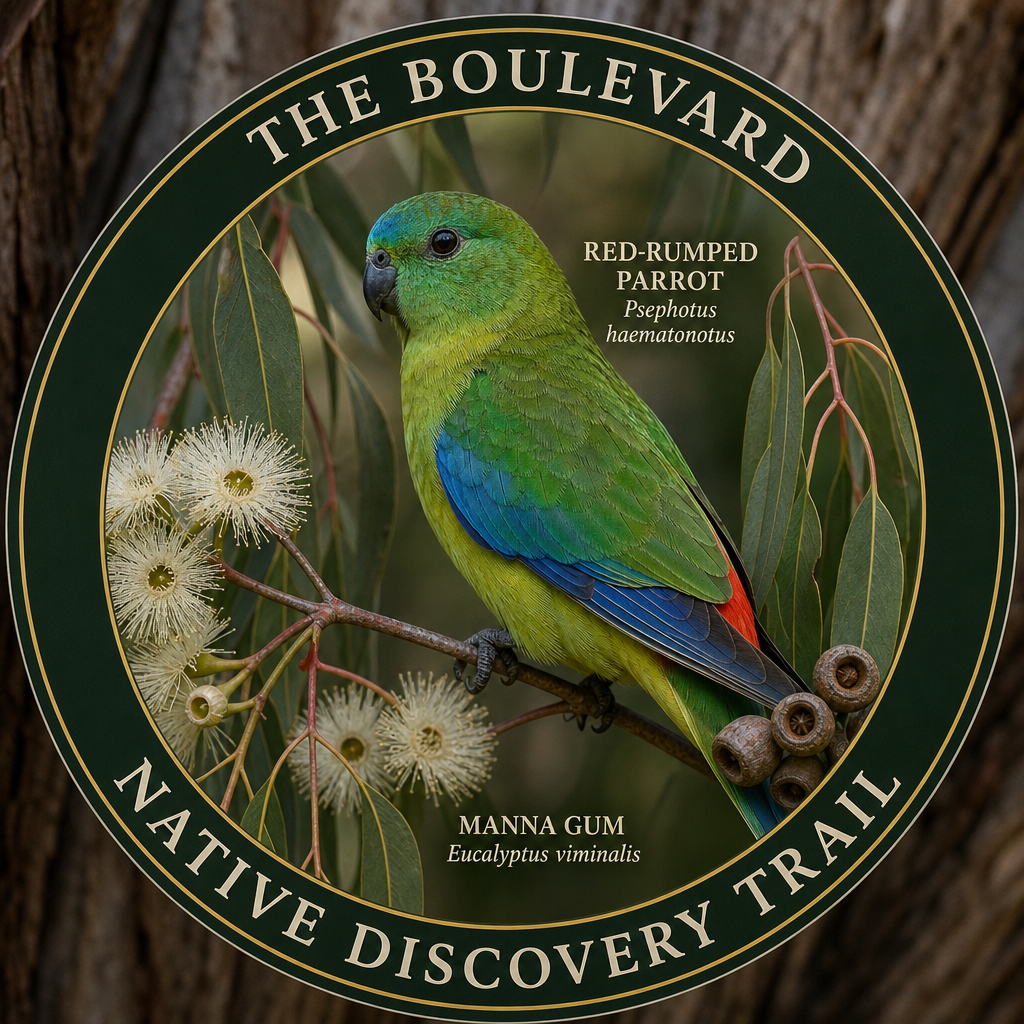
The Red-rumped Parrot is a beautiful grass parrot commonly found feeding on the ground along the Maribyrnong River Trail. The male is bright emerald green with a distinctive red rump patch, while the female is a more subtle olive green.
Often spotted in pairs or small groups pecking at seeds in grassy areas, they have a soft, melodic chattering call and an undulating flight pattern between trees.
Least Concern
Red-rumped Parrots have actually benefited from European land clearing, as they prefer open grassy areas. However, they still depend on tree hollows in old eucalyptus for nesting.
The boy parrot is bright green and the girl parrot is olive-brown. Can you tell which is which? Look for pairs on the ground eating grass seeds!
Unlike many parrots that eat in trees, Red-rumped Parrots love to eat on the ground. Watch for them pecking at grass seeds on the path edges!
These parrots nest in hollow trees, sometimes in the same hollow year after year. The mum does all the egg-sitting while dad brings her food!
The Manna Gum is a favourite food tree of koalas and a vital part of the river corridor. Its name comes from the sweet, edible sap (manna) that forms on the leaves, which was an important food source for Aboriginal people. The white fluffy blossoms attract honeyeaters and native bees.

Platypuses are mostly silent — listen for the soft splash as they dive.
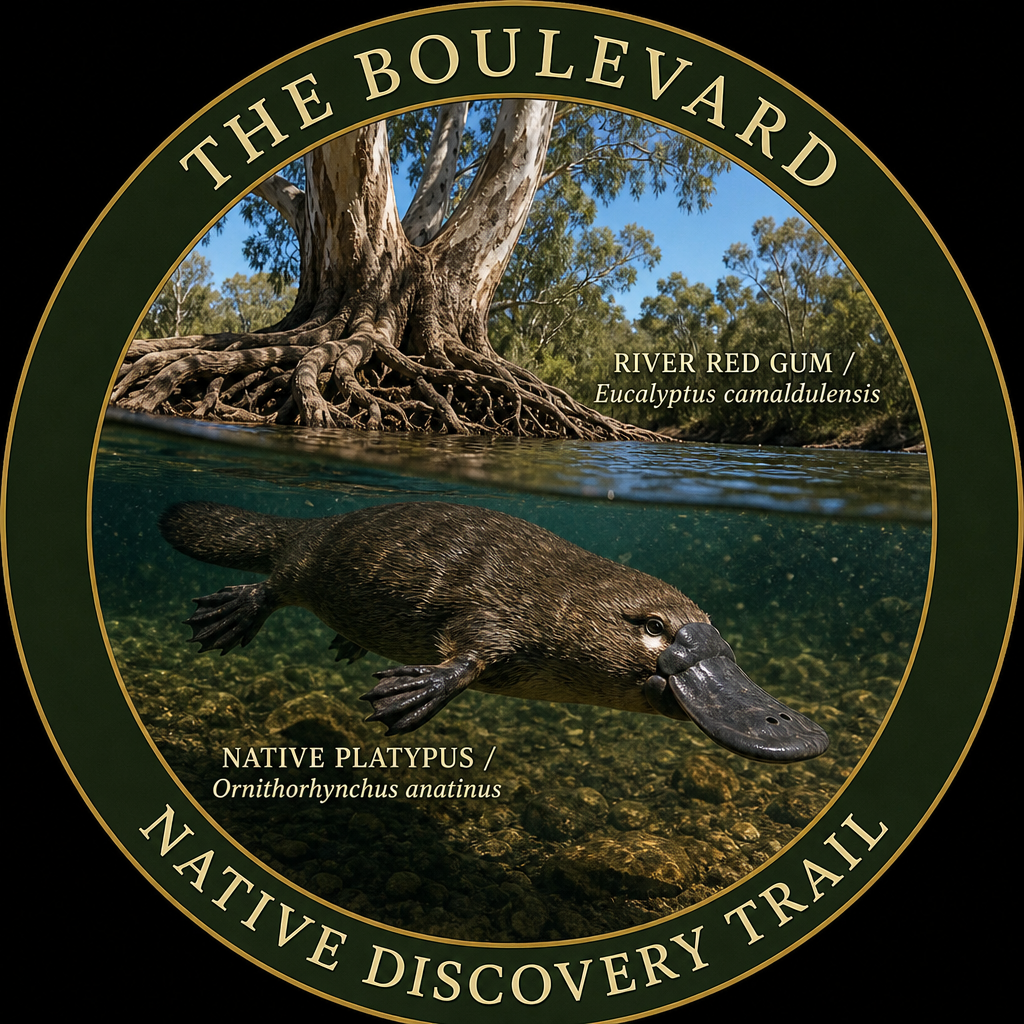
The Platypus is one of the world's most extraordinary animals, and incredibly, they live right here in the Maribyrnong River. This egg-laying mammal has a duck-like bill, a beaver-like tail, and venomous spurs on its hind legs.
Platypuses are most active at dawn and dusk, feeding on aquatic invertebrates detected by electroreceptors in their bills. They can consume their own body weight in food every day.
Near Threatened
Platypus populations have declined significantly. Threats include habitat loss, water pollution, dam construction, and fishing nets. Healthy river corridors like the Maribyrnong are critical refuges.
Dawn and dusk near quiet, deep pools. Look for a small V-shaped ripple on the water surface, or a trail of bubbles. They typically surface for 10–20 seconds to breathe before diving again for 1–2 minutes.
Best months: Year-round, but more active Feb–Apr
When scientists in England first saw a platypus skin, they thought it was a joke — someone had sewn a duck's beak onto a beaver! They even tried to pull the beak off!
A platypus can detect the tiny electrical signals from a shrimp's muscles underwater using special sensors in its bill. It's like having a built-in metal detector!
Platypuses are one of only TWO mammals that lay eggs (the other is the echidna). Mum lays 1–3 tiny eggs and keeps them warm by curling her tail around them!
The massive root systems of River Red Gums create the undercut banks and submerged woody debris that platypuses depend on for shelter and breeding burrows. Their fallen branches in the river create pools and riffles that support the aquatic invertebrates platypuses eat.

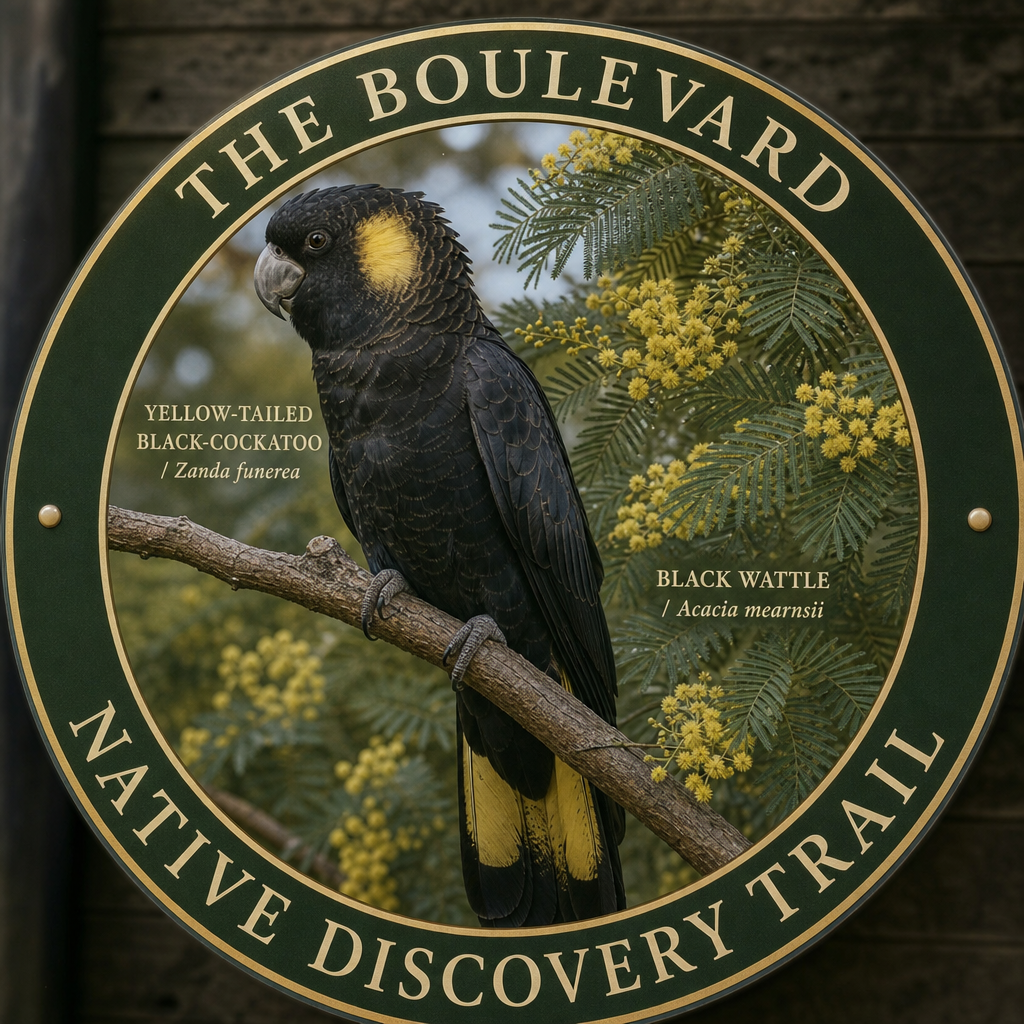
The Yellow-tailed Black-Cockatoo is a magnificent large parrot with glossy black plumage, yellow cheek patches, and bright yellow tail panels. Their haunting, drawn-out wailing call is unmistakable as they fly in small flocks over the river corridor.
They use their powerful bills to tear into wattle seed pods and dead wood searching for beetle larvae. Each bird can eat thousands of wood-boring grubs in a season, making them natural pest controllers.
Least Concern
While still common, loss of old-growth nesting trees is a growing concern. They need very large tree hollows (taking 150+ years to form) to nest in.
Black Cockatoos are like living weather forecasters! In many parts of Australia, people say when Black Cockatoos fly low and call, rain is coming!
Their beak is so strong it can crack through hardwood to find beetle grubs hiding inside! They can rip apart branches that you couldn't even break with your hands.
Black Cockatoos only raise ONE chick per year, and the baby stays with mum and dad for months learning how to find food. They're very devoted parents!
A fast-growing Australian native tree that produces masses of pale yellow to cream ball-shaped flowers. Black Cockatoos rely on its seed pods as a primary food source. The tree also fixes nitrogen in the soil, enriching the ground for other native plants along the river corridor.

Listen for the frog's distinctive low growling call at dusk: "Waaaaaaaa–Waaaaaaaa"
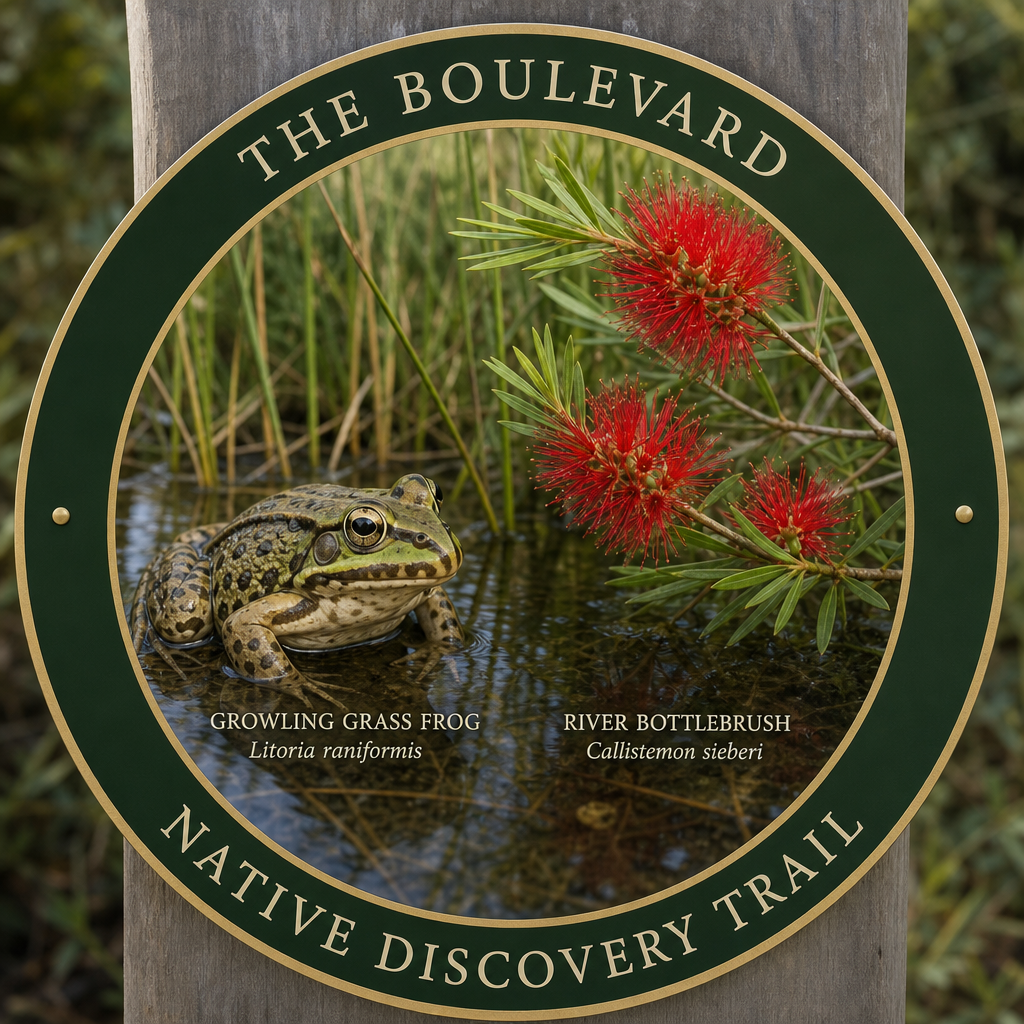
The Growling Grass Frog is one of Australia's largest native frogs, growing up to 10 centimetres long. Named for its distinctive low growling call, this green and brown mottled frog was once common across south-eastern Australia but has declined dramatically.
They're powerful swimmers and voracious predators, eating insects, smaller frogs, and even small mice. They can leap over 1 metre in a single bound.
Vulnerable
Listed as vulnerable in Victoria. Threatened by habitat loss, chytrid fungus disease, water pollution, and invasive species. The Maribyrnong River corridor is one of their remaining urban refuges.
This frog is called the GROWLING Grass Frog because it makes a sound like a little growling motor: "Waaaaa-Waaaaa!" Listen carefully at sunset!
This frog can jump over 1 METRE in a single leap! That's like you jumping the length of a car. Try jumping as far as you can — can you beat a frog?
These frogs are in trouble and need our help. You can help by never putting chemicals down drains (they flow to the river), and by planting native plants in your garden!
The River Bottlebrush is a hardy native shrub with vivid red brush-shaped flowers that attract honeyeaters, bees, and butterflies. Growing along waterways, it helps stabilise riverbanks and filter runoff, maintaining the clean water that Growling Grass Frogs need to survive.